Today I am going to explain another phrase using numbers.
Today’s example is: Terrible twos.
This phrase describes children who are around 2 years old that tend to be difficult by crying a lot or having tantrums. How to view a 2 year-old is different depending on cultures and western culture tends to consider that 2 year-olds are hard to handle.
- A simple phrase: “My son is not obedient and very difficult.”
- A native speaker phrase: “My son is going through the terrible twos.”
Another example is:
- A simple phrase: “I do not know what to do with my daughter. She is so difficult!.”
- A native speaker phrase: “I do not know what to do with my daughter. She is nearly 5 years old but she is as if she is going through the terrible twos.”
Sharing parenting experiences is universally important and interesting. Use this phrase and you will sound more like a native speaker!
Happy English Learning!
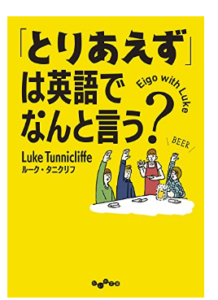 While I was browsing a book store at an airport, this book title caught my eye. English learners in Japan tend to want to know the exact translation of an English word to Japanese or vice versa. It is possible if things can be clearly defined such as a computer, a camera, an apple, or a pair of shoes. But when a word or phrase is a bit more complicated it is not that straightforward. The book conveys this message very well and it offers a list of Japanese words and how they are translated depending on the context.